Introduction: The Video Wall Technology Revolution in 2025
At InfoComm India 2025, major display manufacturers showcased next-generation LED video wall technologies, with Chip-on-Board (COB) LED displays taking center stage as the future of mission-critical control room visualization. For highway authorities and smart city operators planning traffic management centers, understanding the difference between COB vs SMD LED display technology is crucial for making informed procurement decisions.
As India expands its network of Integrated Command & Control Centers for traffic management, the choice between COB and Surface-Mounted Device (SMD) LED video walls significantly impacts operational reliability, image quality, and long-term total cost of ownership. This comprehensive guide examines both technologies, helping you select the optimal solution for your command center deployment.
Understanding COB LED Display Technology
What is COB LED Technology?
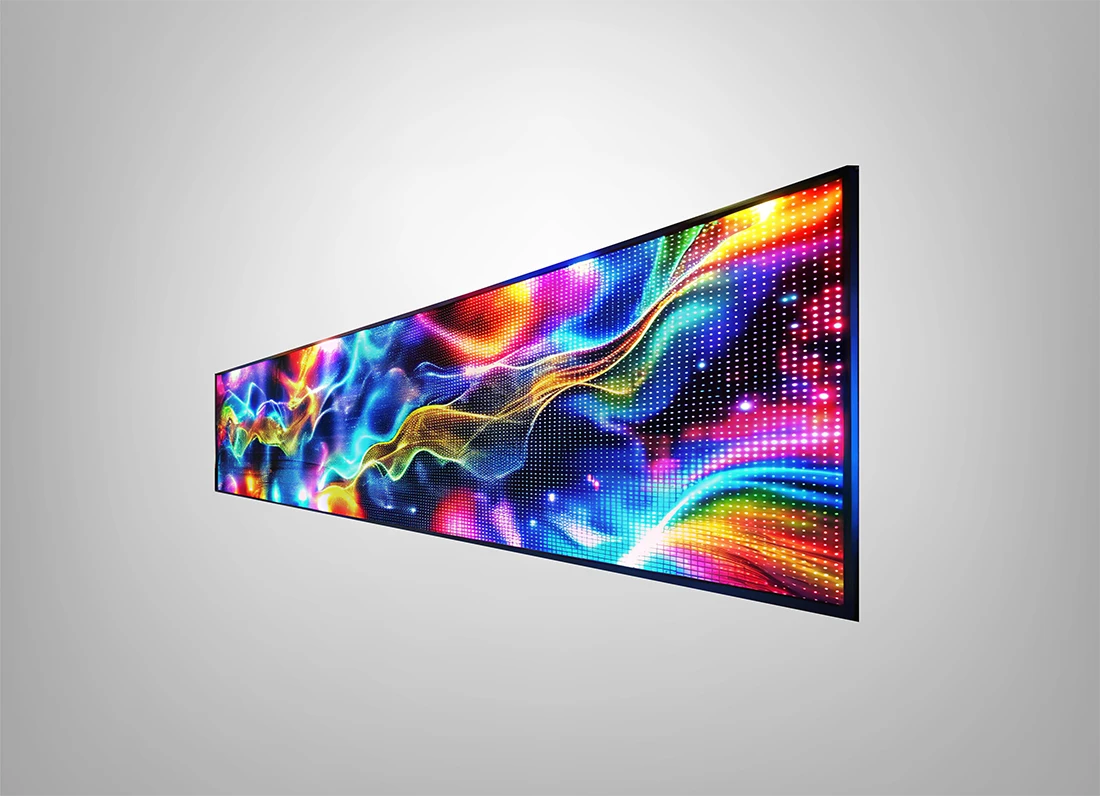
Chip-on-Board (COB) LED displays represent the latest evolution in LED video wall manufacturing. Unlike traditional SMD technology where individual LED lamp beads are mounted on the PCB, COB integrates multiple LED chips directly onto the circuit board and encapsulates them with a protective resin layer.
This integrated design creates a seamless, flat surface with no exposed LED components—delivering superior durability and image quality compared to conventional SMD displays.
Key Advantages of COB LED Video Walls
Superior Durability and Protection:
COB displays feature a protective epoxy layer covering the entire surface, achieving higher protection ratings than traditional SMD. This seamless surface prevents dust accumulation, moisture ingress, and physical damage to LED chips—critical for 24×7 control room operations where reliability is paramount.
Ultra-Fine Pitch Capability:
COB technology enables reliable production of ultra-fine pixel pitches below P1.0, including P0.9, P0.7, and even finer configurations. This makes COB ideal for command centers where operators view displays from 2-4 meters, requiring high pixel density for clear visualization of detailed traffic camera feeds and data dashboards.
Enhanced Image Quality:
With wider viewing angles (170° horizontal/vertical), higher contrast ratios (20,000:1), and better color uniformity, COB displays deliver superior image quality compared to SMD. The seamless surface eliminates visible LED lamp beads, creating smooth gradients and eliminating graininess in images.
Exceptional Heat Dissipation:
COB’s integrated design dissipates heat through the entire PCB rather than individual solder pads, enabling better thermal management. This extends component lifespan and maintains consistent brightness levels during continuous 24×7 operation in traffic management centers.
Understanding SMD LED Display Technology
What is SMD LED Technology?
Surface-Mounted Device (SMD) LED displays use discrete LED lamp beads mounted on PCB modules. Each pixel contains red, green, and blue LED chips packaged into individual surface-mounted components that are then soldered onto the circuit board.
SMD has been the industry standard for over a decade, with mature manufacturing processes and a well-established supply chain supporting widespread adoption across outdoor and indoor applications.
Key Advantages of SMD LED Video Walls
Lower Initial Investment:
SMD displays benefit from mature manufacturing processes and economies of scale, resulting in lower upfront costs compared to equivalent COB configurations. For budget-conscious deployments or larger installations where pixel pitch above P1.2 is acceptable, SMD offers compelling value.
Field-Serviceable Repairs:
Individual SMD lamp beads can be replaced on-site by technicians without returning modules to the factory. For large video wall installations spanning multiple square meters, this serviceability advantage reduces downtime and maintenance logistics complexity.
Proven Track Record:
With decades of deployment across diverse applications, SMD technology offers proven reliability and a vast ecosystem of compatible controllers, mounting systems, and spare parts. This maturity reduces procurement risk for risk-averse government projects.
Higher Brightness Options:
SMD modules typically achieve higher maximum brightness levels compared to some COB configurations, making them suitable for control rooms with high ambient light or applications requiring maximum luminance output.
COB vs SMD LED Display: Technical Comparison
| Feature | SMD LED Display | COB LED Display | Best For |
|---|---|---|---|
| Optimal Pixel Pitch Range | P1.2 and above | P0.7 to P1.5 | COB for ultra-fine pitch |
| Surface Protection | Standard LED exposure | Fully encapsulated | COB for durability |
| Viewing Angle | 160° typical | 170° typical | COB for wide viewing |
| Contrast Ratio | 3,000:1 to 5,000:1 | 20,000:1 | COB for image quality |
| Heat Dissipation | Moderate | Superior | COB for thermal management |
| Dead Pixel Risk | Moderate | Lower | COB for reliability |
| Initial Investment | Lower | Higher | SMD for budget |
| Maintenance | On-site lamp replacement | Module-level service | SMD for field repairs |
| Typical Lifespan | 50,000-80,000 hours | 100,000+ hours | COB for longevity |
| Best Applications | Large installations P1.5+, outdoor | Command centers, close viewing | Depends on requirements |
When to Choose COB LED Video Walls
Ideal Applications for COB Technology
Traffic Management Command Centers:
For highway control rooms where operators monitor dozens of camera feeds simultaneously from 2-4 meters viewing distance, COB’s ultra-fine pitch (P0.7, P0.9) delivers pixel-level clarity essential for identifying license plates, reading VMS displays, and assessing traffic conditions with precision.
Smart City Integrated Command Centers:
Municipal ICCCs consolidating traffic, surveillance, emergency services, and utility monitoring benefit from COB’s superior image quality and wide viewing angles. Multiple operators viewing screens from different positions require consistent color and brightness uniformity—COB’s strengths.
24×7 Mission-Critical Operations:
Control rooms operating continuously without scheduled downtime need maximum reliability. COB’s protective encapsulation and superior heat dissipation reduce failure rates, while longer component lifespan (100,000+ hours) minimizes maintenance interventions during critical operations.
Close Viewing Distance Requirements:
Any application where viewers sit within 2-3 meters of the display benefits from COB’s ultra-fine pitch capability. At these distances, SMD’s visible LED lamp beads and lower pixel density become apparent, whereas COB maintains seamless image quality.
Recommended COB Configurations
TraffiVue XN COB P0.7:
- 0.79mm pixel pitch
- 600 nits brightness, 20,000:1 contrast
- 170° × 160° viewing angles
- Ideal for: Premium command centers, VIP briefing rooms, close viewing (1.5-3m)
- Applications: National highway control rooms, metro city ICCCs
TraffiVue XN COB P0.9:
- 0.93mm pixel pitch
- 800 nits brightness, 20,000:1 contrast
- 170° × 160° viewing angles
- Ideal for: Standard control rooms, conference centers, moderate viewing (2-4m)
- Applications: State highway TMCs, district smart city centers
When to Choose SMD LED Video Walls
Ideal Applications for SMD Technology
Large-Format Video Walls:
For expansive video wall installations spanning entire control room walls, SMD’s lower per-square-meter cost makes large-scale deployments more budget-feasible. When viewing distance exceeds 5 meters, the image quality differences between SMD and COB diminish.
Budget-Constrained Projects:
Government projects with fixed budgets but requiring immediate deployment benefit from SMD’s cost advantage. For applications where P1.5 or P1.8 pixel pitch meets requirements, SMD delivers excellent value without over-specifying technology.
Outdoor or Semi-Outdoor Applications:
Video walls in lobbies, public areas, or locations with high ambient light leverage SMD’s higher brightness output capabilities. While COB excels indoors, SMD’s proven outdoor variants offer better luminance for challenging lighting conditions.
Projects Requiring Maximum Serviceability:
Installations in remote locations without easy factory access benefit from SMD’s field-serviceable design. On-site technicians can replace individual lamp beads, reducing logistics complexity and minimizing downtime compared to factory module repairs.
Recommended SMD Configurations
TraffiVue TN SMD P1.25 (TN 1.2):
- 1.25mm pixel pitch
- ≥600 nits brightness, 5,000:1 contrast
- ≥160° viewing angles
- Ideal for: Standard control rooms, moderate viewing distance (3-5m)
- Applications: District highway sections, smaller TMCs
TraffiVue TN SMD P1.53 (TN 1.5):
- 1.53mm pixel pitch
- ≥600 nits brightness, 5,000:1 contrast
- ≥160° viewing angles
- Ideal for: Large-format walls, cost-conscious deployments (4-6m viewing)
- Applications: Regional traffic centers, training facilities
TraffiVue TN SMD P1.86 – P2.5 (TN 1.8, TN 1.9, TN 2.5):
- 1.86-2.5mm pixel pitch options
- ≥600 nits brightness
- ≥160° viewing angles
- Ideal for: Extra-large installations, public displays (5+ meters)
- Applications: Highway toll plaza monitoring, visitor centers
Total Cost of Ownership Considerations
Understanding Long-Term Value
While upfront costs differ between COB and SMD technologies, total cost of ownership over a video wall’s operational lifespan includes several factors:
Energy Consumption:
COB displays typically consume lower power per square meter compared to equivalent SMD configurations. For 24×7 operations, this translates to measurable electricity cost savings over multi-year deployments.
Maintenance Requirements:
SMD installations require regular lamp bead inspections and replacements as individual LEDs fail over time. COB’s encapsulated design significantly reduces maintenance frequency, though module-level repairs (when needed) may require factory service.
Component Lifespan:
COB technology’s superior heat dissipation and protective encapsulation extend component lifespan (100,000+ hours rated) compared to SMD (50,000-80,000 hours typical), reducing long-term replacement costs.
Operational Reliability:
For mission-critical command centers where downtime impacts highway operations, COB’s lower failure rate and extended maintenance intervals provide operational value beyond direct cost savings.
Making the TCO Decision
Organizations should evaluate total cost of ownership based on:
- Expected operational lifespan (5, 10, or 15+ years)
- Criticality of uninterrupted operation
- Maintenance logistics and support capabilities
- Budget constraints for initial investment versus long-term operations
For 10+ year deployments in mission-critical environments, COB’s operational advantages typically offset higher initial investment. For shorter-term projects or less critical applications, SMD’s lower upfront cost may align better with project economics.
Integration with Video Wall Controllers
Controller Requirements for COB Displays
COB displays demand higher processing power due to ultra-fine pixel pitch and higher refresh rates. The INFINITA GPU-based video wall controller delivers optimal performance for COB installations:
Key Capabilities:
- Desktop resolution up to 32,768 × 32,768 pixels
- 4K input support (3840 × 2160 @ 60Hz)
- Multi-window layouts with independent layer control
- GPU failover and hot backup for 24×7 reliability
- ≥4 multichannel outputs
Recommended for: TraffiVue XN COB P0.7 and P0.9 installations
Controller Options for SMD Displays
SMD displays work with both high-end GPU controllers and cost-effective dedicated LED processors. The TN25-6P video wall controller optimizes price-performance for SMD installations:
Key Capabilities:
- 6.5M pixel capacity across 10 Gigabit Ethernet outputs
- Maximum output: 10,240 pixels width, 8192 pixels height
- 4K input support with stepless scaling
- Lower power consumption (<35W)
- Three working modes: Video Controller, Fiber Converter, Bypass
Recommended for: TraffiVue TN SMD series installations
Installation and Commissioning Best Practices
Pre-Installation Checklist for COB Video Walls
Structural Requirements:
- Wall load capacity verification for module weight
- Mounting system: Fixed or front-serviceable frames with vibration dampening
- Clearance: Adequate space behind display for cable management and airflow
Environmental Controls:
- Temperature: 0-45°C operating range (per datasheet specifications)
- Humidity: 10-90% RH, non-condensing
- Air filtration recommended for control rooms to minimize particle accumulation
Power Infrastructure:
- Dedicated circuits: Maximum 190W/m² for TraffiVue XN COB series
- UPS backup: Recommended for mission-critical applications
- Power quality: Voltage regulation within specifications
Pre-Installation Checklist for SMD Video Walls
Structural Requirements:
- Wall load capacity for cabinet weight (≤7kg per cabinet for TN series)
- Mounting system: Modular cabinets with easy panel access for maintenance
- Clearance: Adequate space for serviceable design and airflow
Environmental Controls:
- Temperature: -10°C to +45°C operating range (per datasheet)
- Humidity: 10-90% RH, non-condensing
- Ventilation: Adequate cooling for thermal management
Power Infrastructure:
- Dedicated circuits: ≤550W/m² maximum for TraffiVue TN SMD series
- Average consumption: ≤250W/m²
- UPS backup: Recommended for mission-critical applications
Future-Proofing Your Video Wall Investment
Technology Roadmap: 2025-2030
COB LED Evolution:
- Ultra-fine pitches advancing to P0.5 and below
- Enhanced protection ratings and durability features
- Improved thermal management for extended lifespan
- Integration with advanced control systems and AI-powered calibration
SMD LED Evolution:
- Enhanced protection layers improving durability
- Manufacturing optimization reducing costs
- 4-in-1 and advanced packaging technologies
- Better outdoor variants with higher protection ratings
Selecting Future-Proof Configurations
For New-Build Command Centers (2025+):
Consider COB LED with P0.9 or finer to ensure:
- Compatibility with 4K/8K content standards
- Sufficient pixel density for emerging applications
- Technology relevance through 2035+
- Close viewing distance capability
For Retrofit or Budget Projects:
Consider SMD LED with P1.5 or appropriate pitch to balance:
- Cost-effectiveness for immediate deployment
- Adequate performance for current requirements
- Standard viewing distances (4+ meters)
- Proven reliability and serviceability
Frequently Asked Questions About COB vs SMD LED Displays
Q: Can COB displays be repaired on-site like SMD?
A: COB’s integrated design requires module-level service rather than individual LED replacement. However, COB’s superior reliability means failures are significantly less frequent. The protective encapsulation dramatically reduces dead pixel occurrence compared to SMD installations.
Q: Is the image quality difference between COB and SMD noticeable in real-world use?
A: At viewing distances under 4 meters with fine-pitch displays, yes—COB’s seamless surface and higher contrast (20,000:1 vs 5,000:1) are clearly superior. For distances exceeding 5 meters or pixel pitches above P1.8, the differences diminish. Command center operators viewing traffic cameras from 3 meters consistently benefit from COB image quality.
Q: How do I decide between COB and SMD for my control room?
A: Consider your viewing distance, operational criticality, and deployment timeline. If operators sit within 3-4 meters and the facility will operate for 10+ years, COB’s advantages justify the investment. If viewing distance exceeds 5 meters or budget constraints are critical, SMD with appropriate pixel pitch delivers excellent value.
Q: What maintenance differences should I plan for with COB versus SMD?
A: SMD requires periodic lamp bead inspections and replacement of failed components. Maintenance staff can perform these repairs on-site with basic tools and spare lamp beads. COB requires less frequent maintenance (primarily cleaning and calibration) but module repairs require factory service. Most COB installations operate years without module failures due to superior encapsulation.
Q: How does pixel pitch selection affect my choice between COB and SMD?
A: COB excels at ultra-fine pitches (P0.7-P1.0) where SMD faces technical challenges. For standard pitches (P1.5+), both technologies perform well, and the choice shifts to other factors like budget and serviceability. The TraffiVue product line offers optimal configurations in both technologies for different pitch requirements.
Conclusion: Making the Right Choice for Your Command Center
The choice between COB vs SMD LED display technology ultimately depends on your specific requirements, viewing distance, budget, and operational priorities. For highway traffic management centers and smart city command facilities where image quality, reliability, and close viewing distances are paramount, COB LED technology represents the superior solution.
COB’s advantages in ultra-fine pitch capability (0.79mm, 0.93mm), durability, heat dissipation, and viewing angles make it the technology of choice for mission-critical control rooms operating 24×7. The protective encapsulation, 20,000:1 contrast ratio, and 100,000+ hour lifespan deliver compelling value for long-term deployments.
For budget-conscious projects, large-format installations, or applications where pixel pitch above P1.5 meets requirements, SMD LED technology continues to offer excellent value. Its mature ecosystem, field serviceability, and proven track record make SMD a pragmatic choice for cost-sensitive deployments or installations with specific maintenance preferences.
As control room technology continues evolving, both COB and SMD technologies advance with new features and capabilities. However, for cutting-edge command centers being deployed in 2025 and beyond, COB’s technological advantages position it as the future-ready choice for critical visualization infrastructure.
Ready to Specify the Optimal Video Wall for Your Command Center?
Rocket Science Technologies offers comprehensive video wall solutions for highway traffic management and smart city control rooms:
COB LED Options:
- TraffiVue XN COB P0.7 – Ultra-fine 0.79mm pitch for premium installations
- TraffiVue XN COB P0.9 – Fine 0.93mm pitch for standard command centers
SMD LED Options:
- TraffiVue TN SMD Series – P1.25, P1.5, P1.86, P1.99, P2.5 configurations
Video Wall Controllers:
- INFINITA GPU Controller – Professional-grade processing for COB displays
- TN25-6P Controller – Optimized LED processor for SMD installations
Complete Integration:
- Site assessment and technology recommendations
- Custom video wall design and layout optimization
- Professional installation and commissioning
- 24×7 support for mission-critical operations
View Products: TraffiVue XN COB P0.7 | TraffiVue XN COB P0.9 | TraffiVue TN SMD | INFINITA Controller | TN25-6P Controller