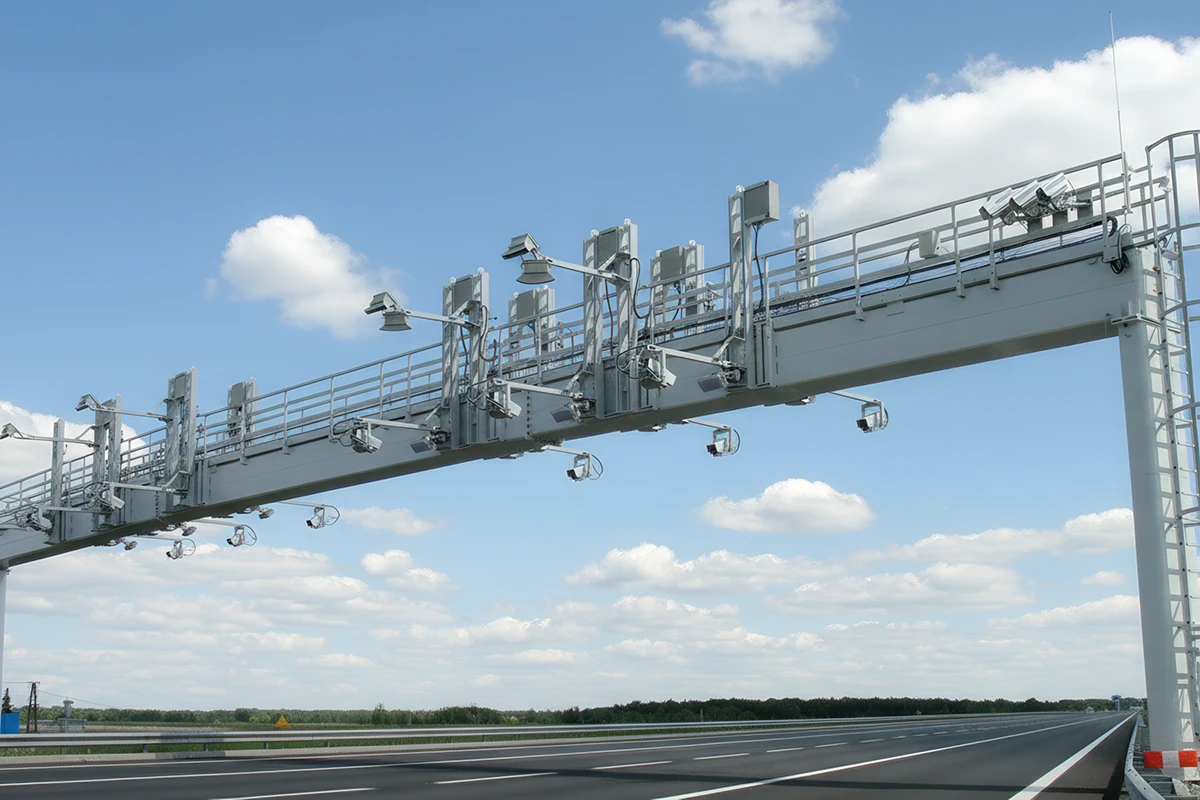

India’s highway infrastructure is entering a new phase—one that goes beyond physical expansion and moves toward intelligence.
Multi-Lane Free Flow (MLFF) is often discussed as the next step in tolling. But in reality, MLFF in India represents a much larger shift—from static infrastructure to dynamic, data-driven systems.
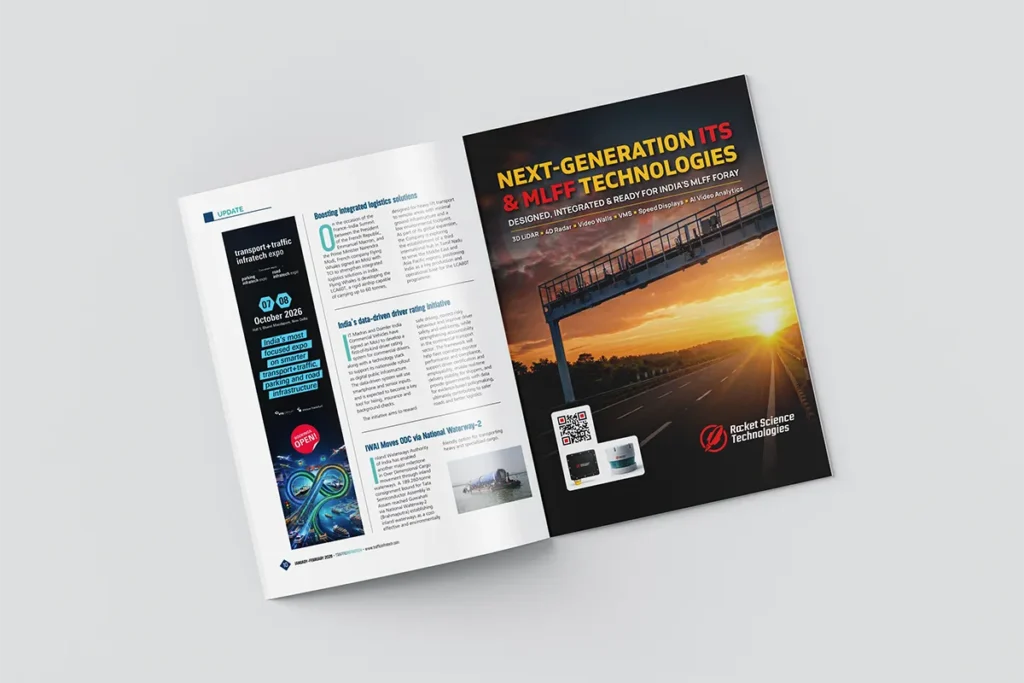
In a recent feature in Traffic InfraTech Magazine, the leadership at Rocket Science Technologies explored how MLFF is redefining highways as intelligent corridors powered by real-time sensing and analytics.
This is not just about removing toll booths. It is about rethinking how highways operate.
MLFF India: More Than Just Removing Toll Booths
The most visible change in MLFF systems is the elimination of toll plazas. Vehicles no longer need to stop or slow down, resulting in smoother traffic flow and reduced congestion.
But this visible improvement is only a byproduct.
At its core, MLFF in India replaces physical tolling infrastructure with continuous digital validation. Vehicles are detected, classified, and processed in motion using advanced sensing technologies.
This creates a fundamental shift:
- Validation moves from physical checkpoints to digital systems
- Traffic flow becomes uninterrupted
- Decisions are made in real time rather than at fixed locations
As highlighted in the interview, MLFF is not just an upgrade—it is a structural redesign of highway operations.
Why MLFF in India Is Technically Complex
Implementing MLFF in controlled environments is one thing. Deploying it across Indian highways is another entirely.
Traffic conditions in India introduce multiple layers of complexity:
- Frequent lane changes
- Mixed vehicle types and sizes
- Highly variable speeds
- Environmental disruptions such as rain, fog, and dust
In such conditions, relying on a single technology is not sufficient. This is why modern MLFF systems are built on multi-layered sensing architectures.
These typically include:
- 3D LiDAR for accurate vehicle dimensioning
- 4D radar for motion tracking and object detection
- ANPR systems for visual identification and validation
These technologies are designed to work together as a unified sensing system, ensuring consistent performance in real-world conditions where variability is the norm.
Accuracy in MLFF Systems: Beyond Simple Detection
A common misconception is that MLFF accuracy depends on detecting vehicles correctly.
In reality, accuracy in MLFF India is defined by consistency over time and movement.
Accuracy is not just about detection. It is about consistent vehicle mapping under real-world movement.
— Ajay Lal Malik, Director
This means tracking each vehicle reliably across:
- Multiple lanes
- Changing speeds
- Overlapping traffic scenarios
Without duplication, misclassification, or loss of data.
This level of precision is essential for:
- Revenue assurance
- Enforcement and compliance
- Traffic analytics
- Corridor-level intelligence
In this context, accuracy is not a feature—it is the foundation of the entire system.
From Tolling to Intelligent Corridor Infrastructure
One of the most important aspects of MLFF India is often overlooked.
These systems do not just collect tolls. They generate structured, real-time data across the highway network, effectively turning roads into intelligent infrastructure layers.
Once deployed, MLFF systems can provide insights such as:
- Traffic flow patterns
- Vehicle classification and density
- Axle-based overloading detection
- Lane discipline monitoring
- Early detection of anomalies
When integrated with Advanced Traffic Management Systems (ATMS), this data enables highways to become responsive and adaptive systems rather than passive assets
This shift allows for better planning, smarter enforcement, and improved safety outcomes—while also making infrastructure measurable and accountable.
MLFF Solutions in India: What Actually Works
Not all MLFF solutions are built the same way. The difference between a functional system and a reliable one lies in how it is designed and integrated.
Effective MLFF solutions in India require:
- Tight integration between sensing technologies
- Calibrated data fusion from LiDAR, radar, and ANPR
- System architecture designed for real-world variability
- Minimal reliance on post-deployment adjustments
A fragmented approach—where technologies are added and integrated later—often leads to inconsistencies and performance gaps.
In contrast, systems that are designed with integration at their core deliver:
- Higher accuracy
- Greater reliability at scale
- Lower operational friction
This is especially critical in India, where deployment conditions are far from predictable.
Our Approach to MLFF in India
At Rocket Science Technologies, the focus is not just on deploying MLFF systems, but on building integrated sensing and intelligence platforms.
The approach centers on:
- Aligning hardware capabilities from the outset
- Designing data fusion as a core system function
- Ensuring consistent performance across varied traffic and environmental conditions
By treating MLFF as a system-level challenge rather than a component-level one, it becomes possible to deliver solutions that are not only functional, but dependable at scale.
The Future of MLFF India: Simpler Roads, Smarter Systems
As MLFF adoption grows, highways will appear simpler to users—fewer interruptions, reduced congestion, and a more seamless driving experience.
Behind that simplicity, however, lies a complex and intelligent system continuously sensing, measuring, and optimizing traffic movement.
The future of MLFF in India will be defined by:
- Continuous monitoring instead of periodic checks
- Data-driven operations instead of manual oversight
- Infrastructure that is measurable, accountable, and adaptive
Infrastructure is no longer passive. It is becoming an active participant in mobility.
A Shift Bigger Than Tolling
MLFF is often positioned as a technological upgrade.
In reality, it represents a transition from physical infrastructure to intelligent infrastructure.
In that transition, sensing, data, and system design become central to how highways operate and evolve.
The highways of the future won’t just move vehicles. They will understand them.
Explore MLFF Solutions in India
MLFF is not just a concept—it requires the right combination of sensing technologies, system design, and real-world deployment expertise.
Explore how Rocket Science Technologies delivers advanced MLFF solutions built for Indian traffic conditions, integrating LiDAR, radar, and intelligent data systems into a unified infrastructure layer.
Read the Full Interview
For a deeper look into MLFF India and the thinking behind these systems, read the full feature in Traffic InfraTech Magazine.