India’s highway infrastructure is undergoing a major transformation.
With the recent rollout of Multi-Lane Free Flow (MLFF) tolling systems across key highway corridors, barrier-less tolling is rapidly moving from concept to reality. The National Highways Authority of India (NHAI) has already operationalised new MLFF toll plazas and announced plans for large-scale expansion across the country over the coming years.
As conversations around MLFF India continue to grow, many people are now asking an important question:
What exactly is MLFF, and how does it work?
The answer goes far beyond simply removing toll booths.
MLFF represents a shift toward intelligent highway infrastructure where vehicles are identified, tracked, and processed in motion using advanced sensing and digital validation systems.
What Is MLFF?
MLFF stands for Multi-Lane Free Flow.
It is a barrier-less tolling system that allows vehicles to pass through toll corridors without stopping or slowing down. Instead of physical toll barriers, MLFF systems use digital technologies to identify vehicles and automatically process toll payments while traffic continues moving uninterrupted.
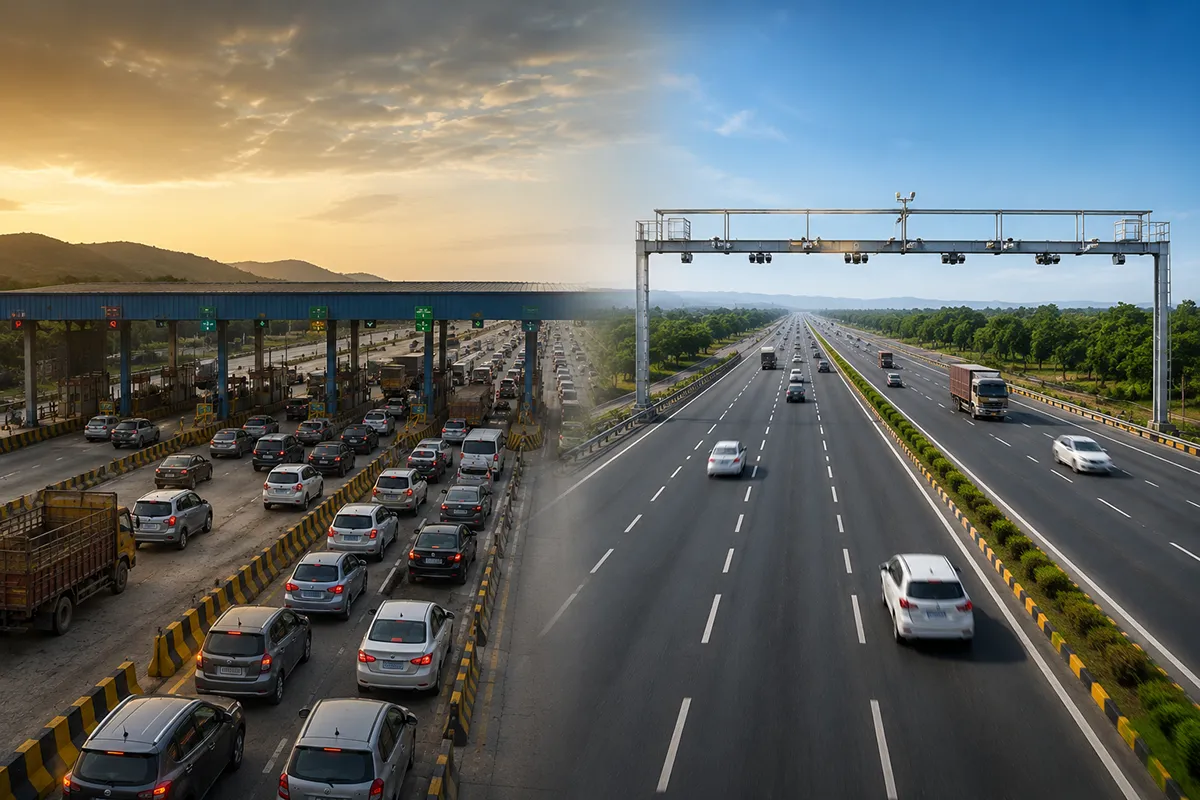
Traditional toll plazas create bottlenecks because vehicles are required to stop, queue, or reduce speed during toll collection.
MLFF eliminates this interruption entirely.
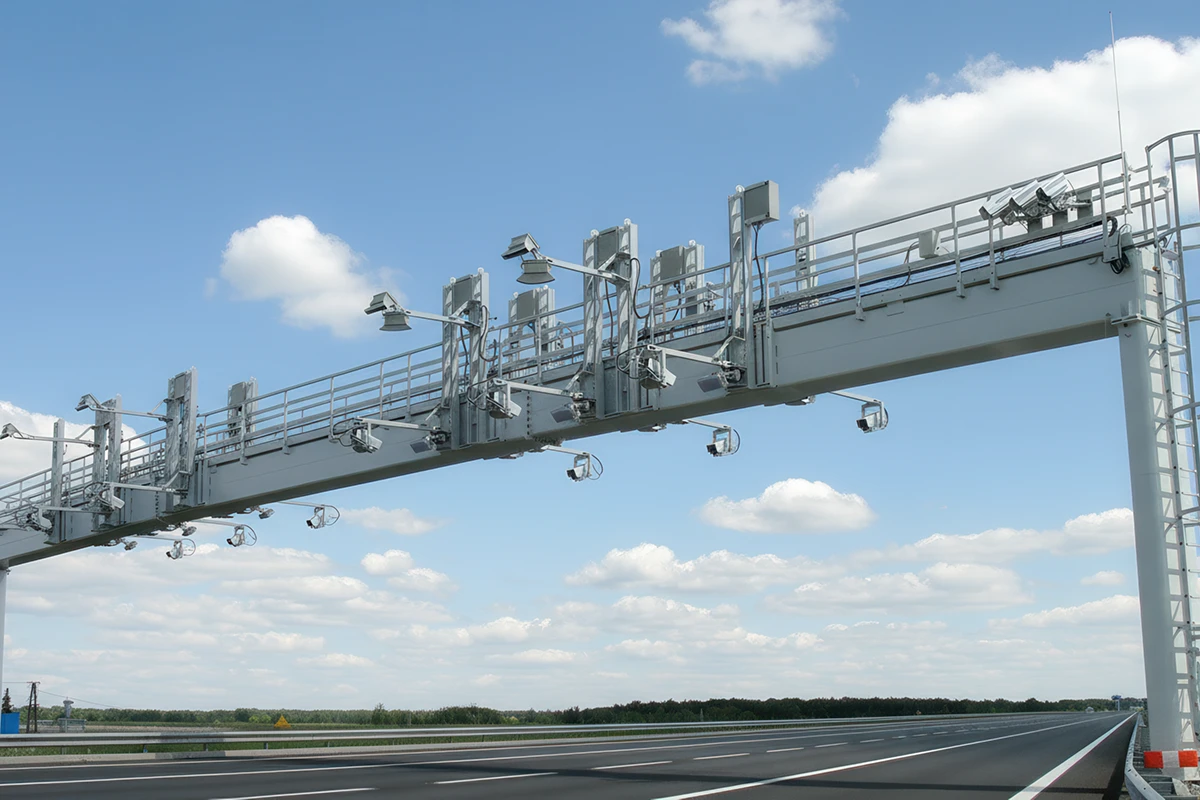
The system works by combining technologies such as:
- Automatic Number Plate Recognition (ANPR) cameras
- FASTag-based electronic toll collection
- Vehicle detection and tracking systems
- Real-time validation infrastructure
Together, these systems enable tolling to happen seamlessly in the background while vehicles remain in motion.
Why Is India Moving Toward Barrier-Less Tolling?
India’s highway network is expanding rapidly, and traffic volumes across major economic corridors continue to increase every year.
Conventional toll plazas, even with FASTag integration, still create:
- Congestion during peak traffic hours
- Delays in freight movement
- Fuel wastage due to stopping and acceleration
- Operational inefficiencies at high-density toll corridors
Barrier-less tolling aims to solve these challenges by enabling uninterrupted movement across highways.
Recently, NHAI inaugurated a new MLFF tolling system at the Mundka-Bakkarwala Toll Plaza on Delhi’s Urban Extension Road-II corridor. The deployment marks the second operational MLFF toll plaza in India after the Choryasi Toll Plaza on NH-48 in Gujarat.
NHAI has also announced plans to expand MLFF infrastructure to 17 toll plazas across nine states by September 2026, followed by more than 108 additional toll plazas under the next phase of deployment.
This signals a broader national transition toward digitally managed highway infrastructure.
How Does MLFF Tolling Actually Work?
From the outside, MLFF systems may appear simple: vehicles pass through a toll corridor and payments happen automatically.
Behind the scenes, however, multiple technologies work together simultaneously.
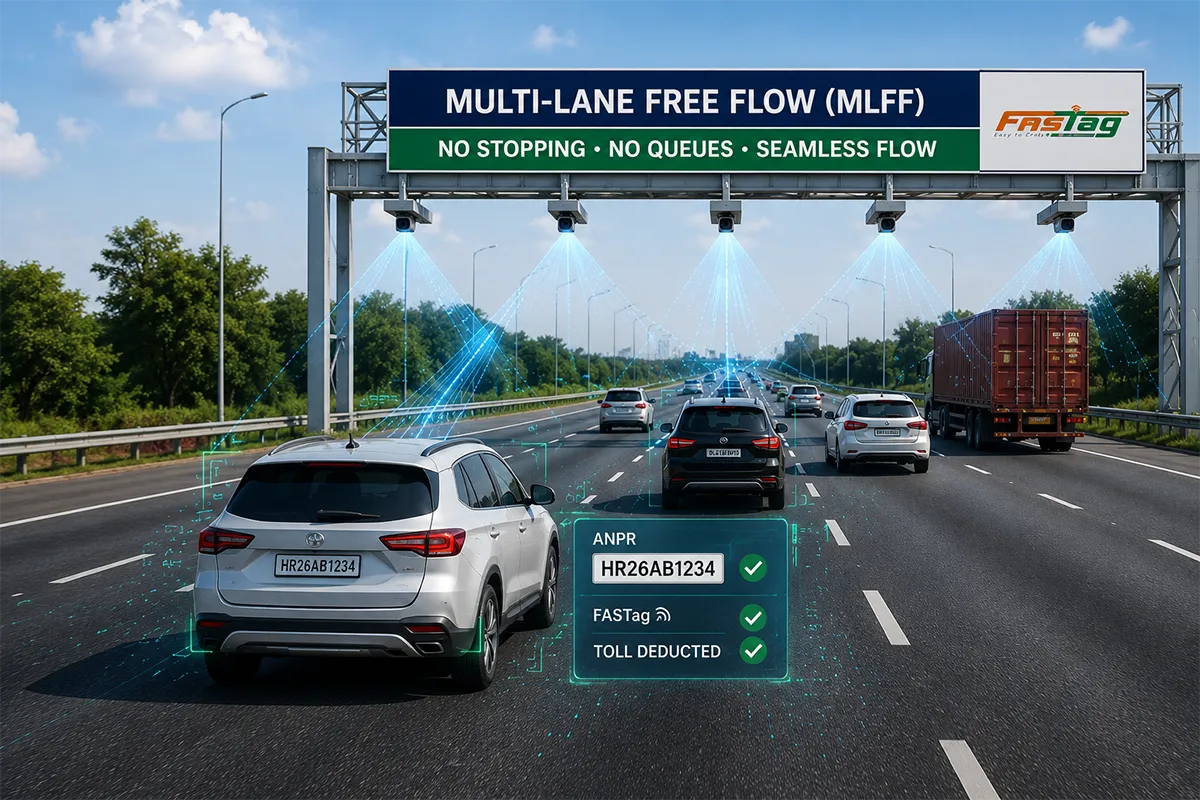
As vehicles move through the corridor, MLFF infrastructure:
- Detects the vehicle in real time
- Identifies the vehicle using ANPR and FASTag systems
- Tracks movement across lanes
- Validates vehicle classification and toll information
- Processes toll collection digitally without requiring physical stoppage
This entire process happens within seconds while traffic continues flowing normally.
The goal is not just automation—it is maintaining reliable and accurate vehicle mapping under real-world traffic conditions.
Why MLFF in India Is Technically Challenging
Implementing MLFF systems in controlled traffic environments is relatively straightforward.
Deploying them reliably across Indian highways is significantly more complex.
Indian traffic conditions involve:
- Frequent lane changes
- Mixed vehicle sizes and categories
- Dense and overlapping traffic movement
- Highly variable driving behavior
- Environmental conditions such as rain, fog, and dust
In these situations, relying on a single technology layer is not enough.
This is why advanced MLFF solutions increasingly depend on integrated sensing infrastructure that combines:
- ANPR systems
- LiDAR technologies
- Radar-based tracking systems
- Real-time vehicle classification engines
These technologies work together to improve accuracy, reduce ambiguity, and maintain reliable detection under unpredictable traffic conditions.
As MLFF India scales nationally, the quality of this sensing infrastructure will become one of the defining factors behind system performance.
MLFF Is More Than Just Toll Collection
One of the most important aspects of MLFF systems is often overlooked.
These systems are not only designed for toll collection—they also create intelligent highway infrastructure capable of generating real-time operational data across entire traffic corridors.
Once integrated with Advanced Traffic Management Systems (ATMS), MLFF infrastructure can support:
- Traffic flow monitoring
- Congestion analysis
- Lane discipline enforcement
- Overloading detection
- Corridor-level operational planning
This transforms highways from passive transport routes into measurable, data-driven infrastructure systems.
As India continues investing in logistics corridors and large-scale road connectivity projects, intelligent sensing and real-time traffic infrastructure will play an increasingly important role in maintaining efficiency and mobility at scale.
The Future of MLFF India
For years, Multi-Lane Free Flow tolling was viewed as a future-facing mobility concept.
Today, that transition is actively underway.
As India accelerates the rollout of barrier-less tolling infrastructure, the focus is no longer just on faster toll collection. The larger goal is to build highways that are:
- More efficient
- More intelligent
- More adaptive
- Better connected through real-time infrastructure systems
The future of Indian highways will increasingly depend on intelligent sensing, integrated corridor management, and continuous operational visibility.
The goal is no longer simply moving vehicles faster.
It is building highways that can understand and optimize movement in real time.
Explore MLFF Solutions in India
As MLFF adoption accelerates across India, reliable sensing infrastructure and integrated system design are becoming increasingly important for large-scale deployment success.
Explore how Rocket Science Technologies delivers advanced MLFF solutions designed for real-world Indian highway conditions through intelligent sensing, integrated infrastructure systems, and scalable corridor technologies.