India’s long-discussed shift toward barrier-less tolling is finally beginning to materialize.
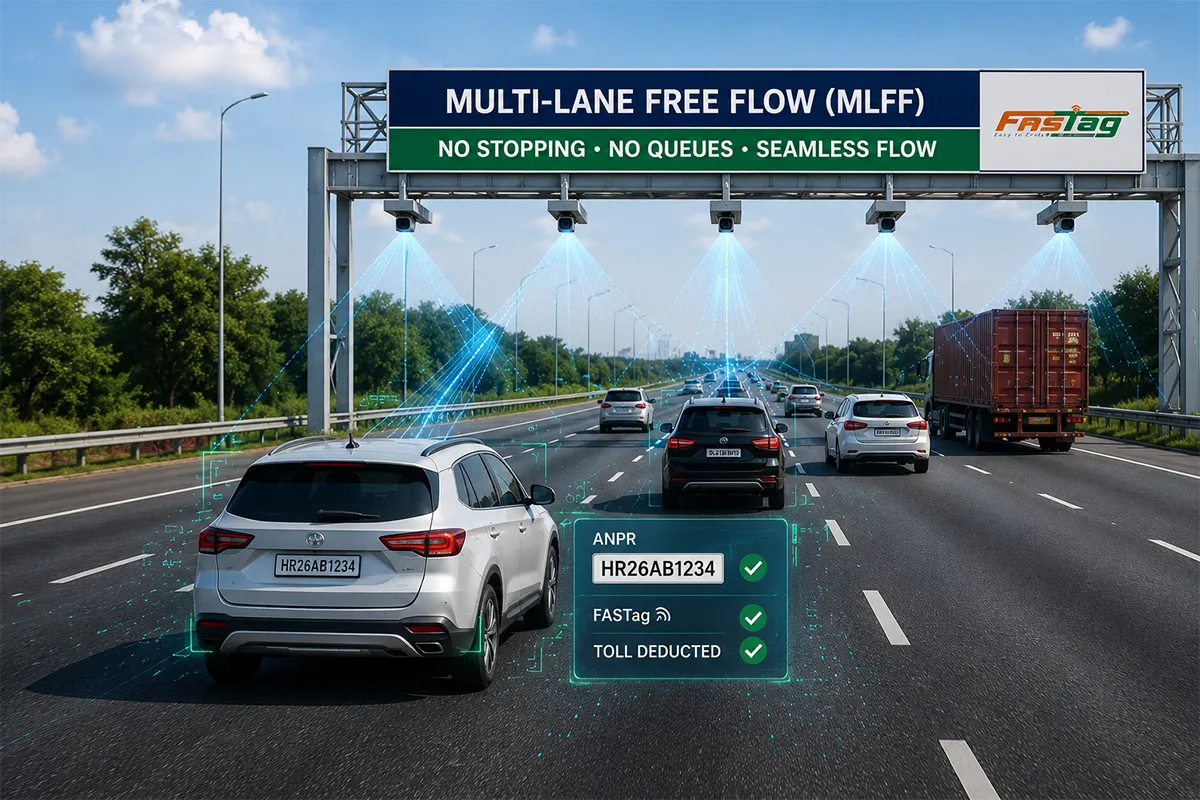
Following the recent rollout of Multi-Lane Free Flow (MLFF) tolling systems at the Choryasi Toll Plaza in Gujarat and Delhi’s Mundka-Bakkarwala corridor, the National Highways Authority of India (NHAI) has announced plans to expand MLFF infrastructure across multiple states over the coming years.
For many drivers, the idea of barrier-less tolling may already sound familiar. Variations of “free-flow tolling” and seamless highway movement have been discussed in India for years.
But despite repeated conversations around the concept, large-scale implementation never truly arrived.
Until now.
So why is MLFF only beginning to see real deployment today?
The answer has less to do with a single policy decision—and far more to do with the fact that India’s surrounding infrastructure ecosystem has finally matured enough to support MLFF deployment at scale.
If you’re unfamiliar with Multi-Lane Free Flow systems and how barrier-less tolling works, you can also read our detailed explainer on What MLFF Is and How India’s New Tolling Infrastructure Works.
MLFF Was Always More Difficult Than It Looked
From the outside, MLFF appears straightforward.
Vehicles pass through a highway corridor without stopping while toll payments are processed automatically in the background. But building a system that can perform this reliably under real-world traffic conditions is significantly more complex than it appears.
For years, several critical pieces of the ecosystem were simply not ready.
Reliable MLFF deployment requires:
- accurate vehicle identification,
- continuous vehicle mapping,
- lane-level movement tracking,
- real-time validation systems,
- and highly consistent sensing performance across dynamic traffic environments.
Indian traffic conditions make this even more challenging due to:
- frequent lane changes,
- mixed vehicle categories,
- dense traffic movement,
- inconsistent driving patterns,
- and environmental conditions such as rain, fog, and dust.
The challenge was never just implementing digital tolling.
The challenge was implementing it reliably at highway scale.
FASTag Quietly Built the Foundation
One of the biggest reasons MLFF rollout is now becoming practical is the widespread adoption of FASTag infrastructure across India.
Before FASTag, digital toll collection systems were fragmented and inconsistent. Vehicle-payment linkage was weak, electronic adoption levels were lower, and large-scale digital tolling workflows had not yet stabilized.
FASTag changed that completely.
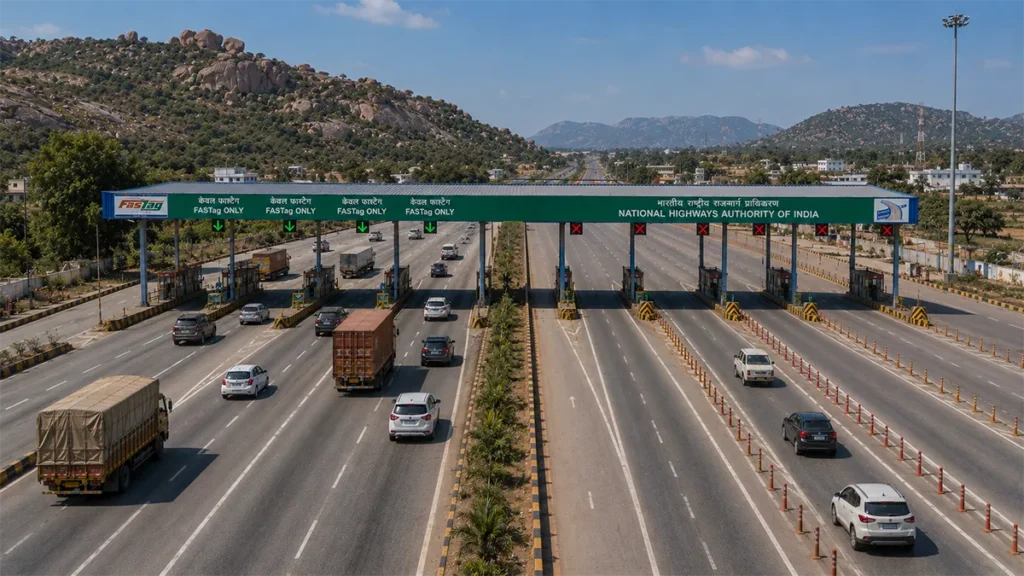
Today, millions of vehicles already participate in digital toll collection systems daily. Banking integration, vehicle validation, and digital payment behavior are now deeply embedded into highway operations.
In many ways, FASTag created the nationwide digital foundation that MLFF systems now build upon.
The Technology Behind MLFF Has Improved Rapidly
Another major shift has been the maturity of sensing and processing technologies themselves.
A few years ago, maintaining accurate vehicle tracking under dense highway conditions was significantly more difficult than it is today.
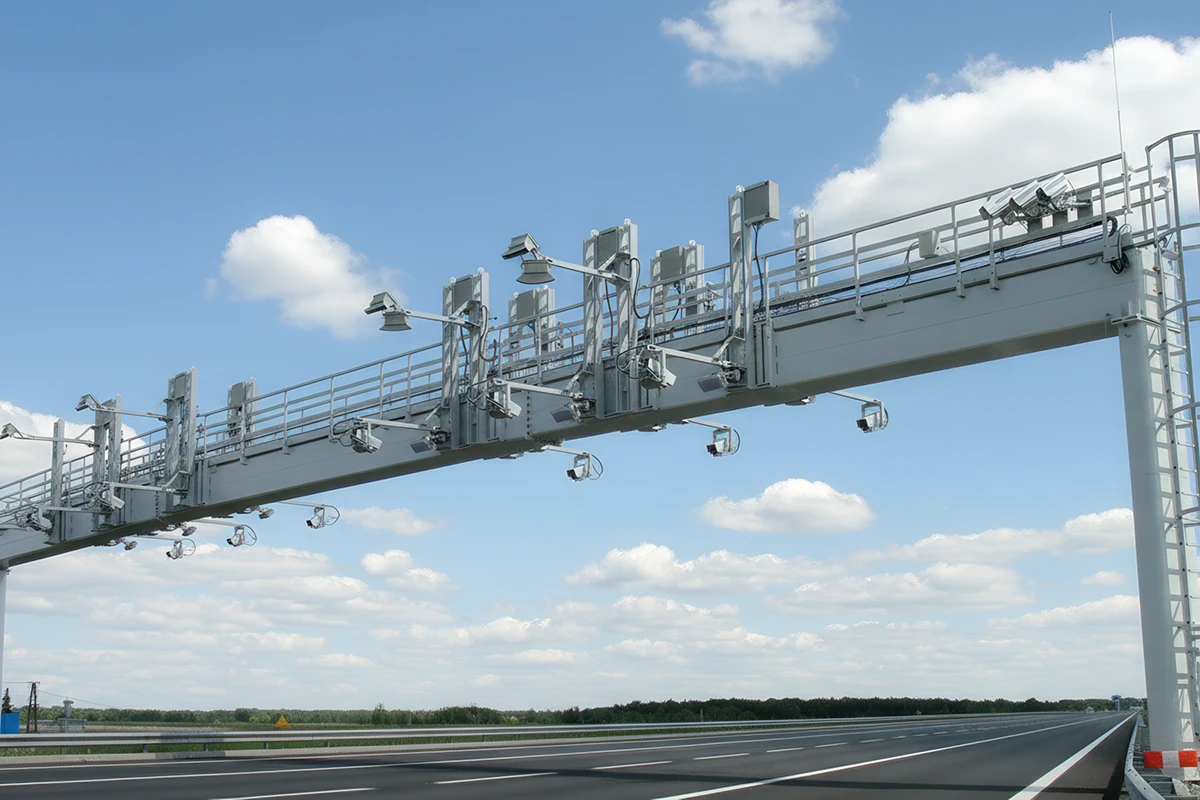
Modern MLFF systems now combine multiple sensing layers such as:
- Automatic Number Plate Recognition (ANPR),
- LiDAR technologies,
- radar-based tracking systems,
- and real-time vehicle classification infrastructure.
These systems work together to reduce ambiguity and improve operational reliability under highly variable traffic conditions.
This is particularly important in India, where overlapping traffic movement and inconsistent lane discipline create challenges that simpler tolling systems struggle to handle reliably.
As organizations working within intelligent highway infrastructure increasingly understand, reliable MLFF operation depends not just on detecting vehicles—but on maintaining consistent vehicle mapping throughout movement across the corridor.
That distinction becomes critical once deployment scales nationally.
India’s Highway Infrastructure Is More Digitally Ready Than Before
India’s highway infrastructure itself has also evolved significantly over the last several years.
Older toll corridors were not originally designed around intelligent sensing systems or digitally integrated corridor management.
Newer infrastructure projects, however, increasingly include:
- improved traffic structuring,
- wider and more organized corridors,
- integrated monitoring systems,
- and greater digital infrastructure readiness.
This creates a far more suitable environment for MLFF systems to operate effectively.
As highway modernization accelerates, barrier-less tolling is becoming easier to integrate into broader intelligent corridor infrastructure.
Congestion Has Become a Much Bigger Problem
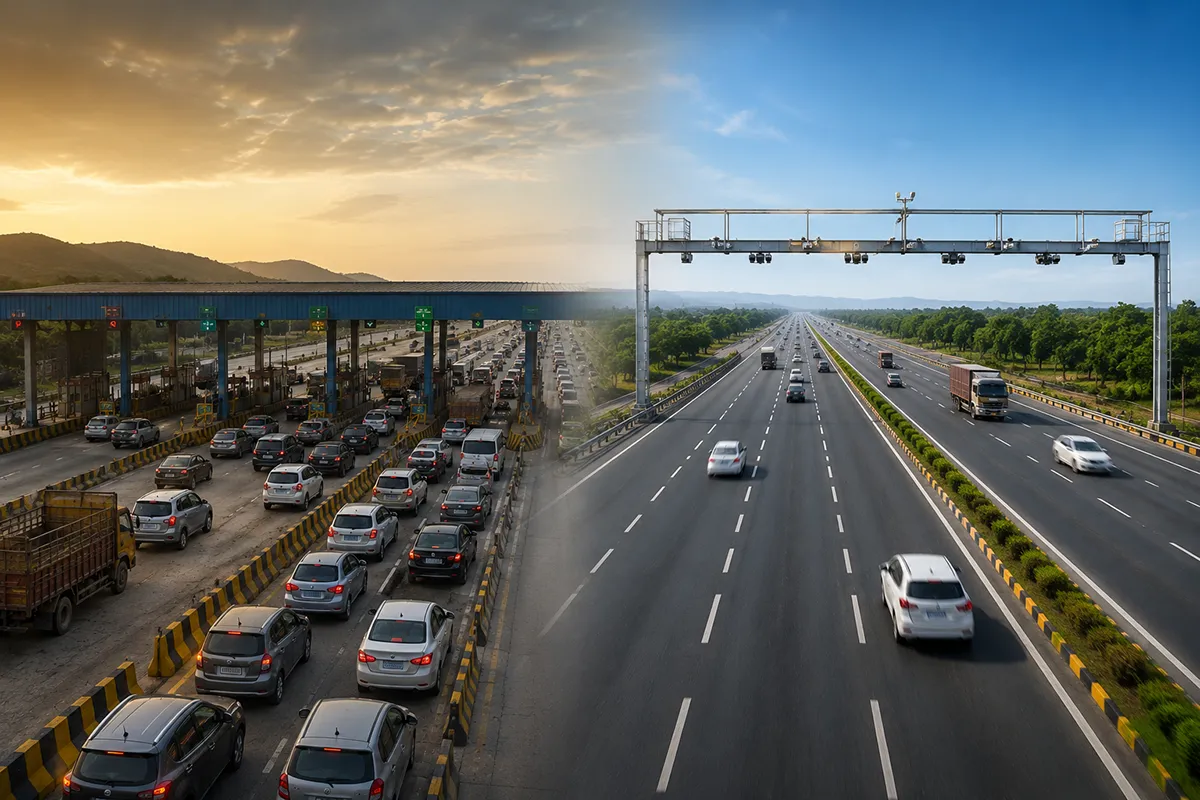
Another reason MLFF rollout is finally accelerating is simple: the cost of congestion has become impossible to ignore.
Traditional toll plazas create:
- traffic bottlenecks,
- unnecessary fuel consumption,
- freight delays,
- and operational inefficiencies across high-density highway corridors.
At national scale, even small interruptions create enormous cumulative impact over time.
Barrier-less tolling is therefore no longer viewed purely as a convenience feature.
It is increasingly becoming part of a broader infrastructure efficiency and logistics modernization strategy.
MLFF Is Becoming Part of a Larger Intelligent Infrastructure Push
MLFF systems are also arriving at a time when India is investing heavily in:
- smart traffic systems,
- Advanced Traffic Management Systems (ATMS),
- corridor digitization,
- AI-assisted monitoring,
- and logistics infrastructure modernization.
This matters because MLFF works best when treated not as a standalone tolling solution, but as part of a larger intelligent corridor ecosystem.
Once deployed, MLFF infrastructure can support:
- traffic flow monitoring,
- congestion analysis,
- lane discipline enforcement,
- vehicle classification,
- and corridor-level operational visibility.
This transforms highways from passive transport routes into measurable, data-driven infrastructure systems.
The Rollout Has Started — But The Hard Part Is Still Ahead
The recent operational deployments in Gujarat and Delhi clearly show that India’s transition toward barrier-less tolling is now actively underway.
NHAI’s expansion plans further indicate that MLFF infrastructure will continue growing across multiple highway corridors over the coming years.
But scaling these systems nationally remains a complex engineering and infrastructure challenge.
Reliable MLFF deployment still depends on:
- sensing accuracy,
- integrated system architecture,
- consistent vehicle mapping,
- enforcement reliability,
- and infrastructure designed specifically for real-world traffic variability.
As rollout expands, the conversation will increasingly shift from simply implementing MLFF systems to ensuring that they perform reliably at scale.
Building Reliable MLFF Infrastructure for Indian Highways
As India moves toward large-scale barrier-less tolling deployment, intelligent sensing infrastructure and integrated system design are becoming increasingly important.
At Rocket Science Technologies, the focus is on building MLFF infrastructure designed specifically for complex real-world highway conditions through:
- integrated sensing systems,
- intelligent vehicle mapping,
- corridor-level infrastructure architecture,
- and scalable deployment reliability.
As highway infrastructure continues evolving, reliable sensing and intelligent corridor systems will play an increasingly central role in how mobility networks operate across India.
MLFF in India Is Finally Becoming Real
For years, barrier-less tolling in India felt perpetually “almost ready.”
Today, several critical layers have finally aligned:
- digital tolling adoption,
- sensing technology maturity,
- highway modernization,
- and intelligent infrastructure investment.
The result is not simply faster toll collection.
It is the beginning of a broader transition toward highways that can monitor, understand, and optimize movement in real time.
The future of Indian highways will increasingly be defined not just by how many vehicles they carry—but by how intelligently they operate.
Explore MLFF Solutions in India
As India accelerates the rollout of barrier-less tolling systems, the demand for reliable sensing infrastructure and integrated MLFF architecture continues to grow.
Explore how Rocket Science Technologies approaches MLFF infrastructure for real-world Indian highway conditions through intelligent sensing, integrated systems, and scalable corridor technologies.